
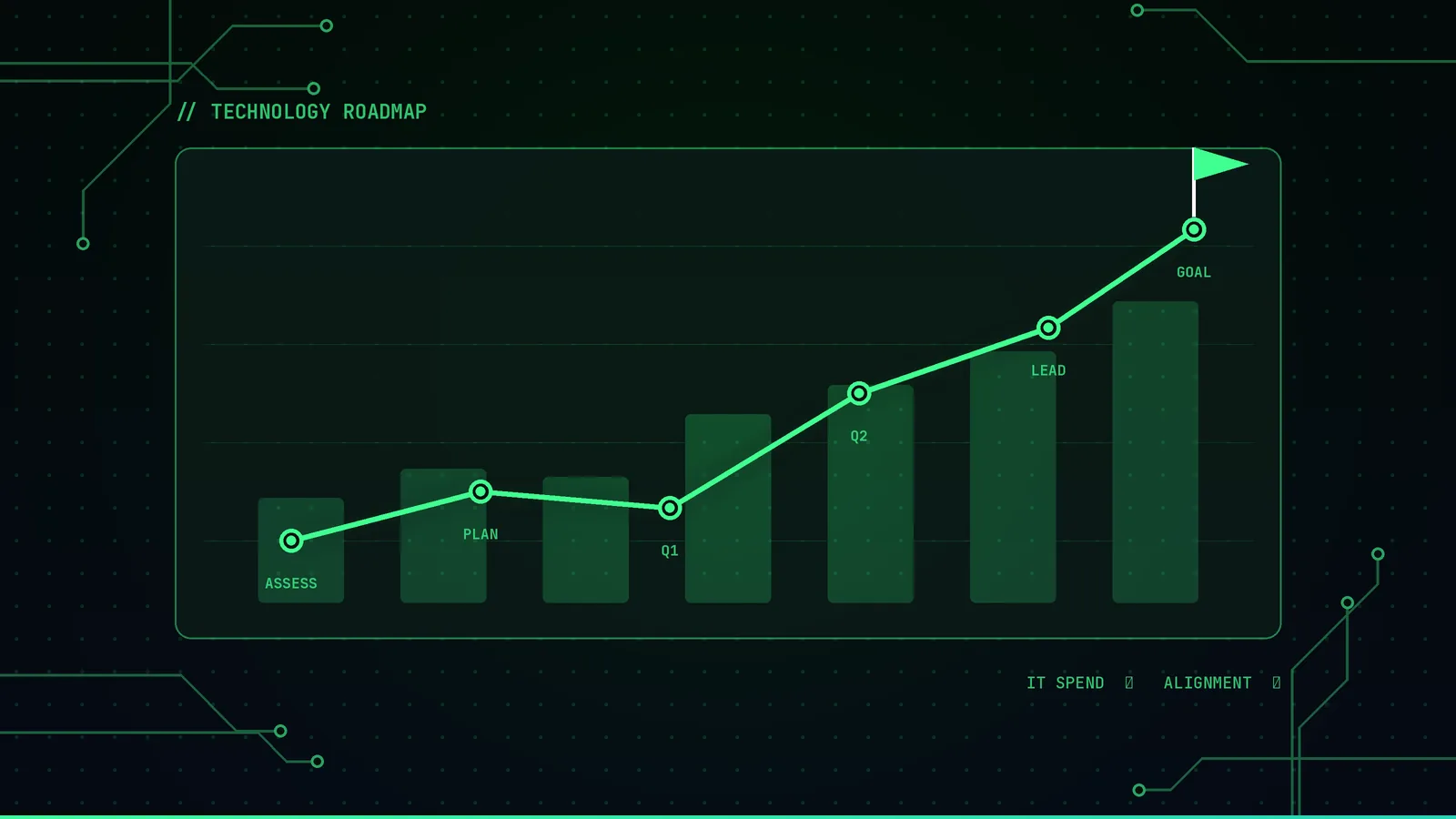
A fractional CIO is an experienced Chief Information Officer who works with your organization part-time. You get executive-level technology leadership, strategy and accountability without hiring a full-time executive.
The role is also called a virtual CIO (vCIO), part-time CIO or outsourced CIO. Whatever the name, the idea is the same: senior leadership sized to what your organization needs today.
What does a fractional CIO do?
A fractional CIO does the same work as a full-time CIO, focused on the priorities that matter most to your business right now. Typical responsibilities include:
- Technology strategy. Building a 12–36 month roadmap tied to business goals.
- Budget ownership. Forecasting IT spend, finding waste and explaining costs to leadership.
- Vendor and MSP management. Selecting providers, negotiating contracts and holding vendors to service levels.
- Security and risk oversight. Directing the security program and preparing for audits, insurance reviews and customer questionnaires.
- Project leadership. Guiding ERP rollouts, cloud migrations, system replacements and acquisitions.
- Team development. Giving internal IT staff direction, priorities and a path to grow.
- Executive representation. Bringing a technology perspective to leadership and board discussions.
Fractional CIO vs. full-time CIO vs. IT provider
| Question | Fractional CIO | Full-time CIO | IT provider only |
|---|---|---|---|
| Sets technology strategy? | Yes | Yes | Rarely |
| Cost | A fraction of an executive salary | Full executive compensation | Operational service fees |
| Time to start | Weeks | Months of recruiting | Weeks |
| Independent oversight of vendors? | Yes | Yes | No, the provider is a vendor |
| Scales with your needs? | Yes | Not easily | Partly |
Signs your organization needs a fractional CIO
- No one on the leadership team owns technology decisions.
- You can't clearly explain what you spend on technology or why.
- Your IT provider is making strategic decisions by default.
- A major project, such as a system replacement or migration, is coming.
- Customers, auditors or insurers are asking security questions you can't answer.
- Your IT leader left and you need coverage while you hire.
How a fractional CIO engagement usually works
- Assessment. Interviews, a systems and vendor inventory, a spending review and a risk snapshot.
- Roadmap. Priorities agreed with leadership, including quick wins and a budget.
- Ongoing leadership. A set amount of time each month, with regular reporting against the plan.
- Review and adjust. Quarterly check-ins as the business changes.
Most engagements are structured as a monthly retainer. Some organizations start with a short assessment to build the roadmap first.
How to choose the right fractional CIO
- Hands-on experience. Look for someone who has run IT operations, not only advised on them.
- Business focus. Recommendations should connect to cost, risk and growth, in plain language.
- Security and compliance knowledge. Governance should be part of the plan from day one.
- Independence. Ask how they are paid and whether they earn commissions from vendors they recommend.
- A handoff mindset. Good fractional leaders document their work so your organization is never dependent on them.
The bottom line
A fractional CIO gives growing organizations the strategic technology leadership they need at a cost that fits. If technology decisions feel reactive or unclear, a short conversation is a low-risk way to find out whether it's the right move.